Shipping Weight & Dimensions
| Weight | 11 oz |
|---|---|
| Dimensions | 17 × 4 × 4 in |


$60.00
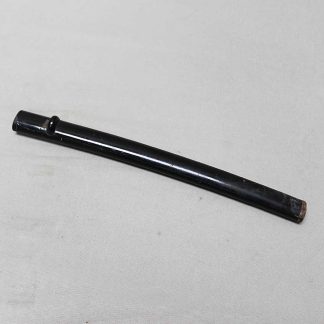
Japanese old wood saya (scabbard). Black lacquer finish. The Koiguchi (section where blade is inserted) and Kojiri (end cap) are both heavily worn condition. The Kurigata (small knob or ring mounted on the upper side of the saya) is still there and not broken off. Also, has one small side pocket on the other side for an accessory like a kogatana (small knife) or a Kogai, the side pocket has a lot of cracks and damage. Overall length approximately 16 3/4 inches. Very heavily worn condition with much cracking and splits.
Additional Notes: The saya is typically made from two halves of honoki (magnolia) wood, hollowed to the exact shape of the blade, glued together with rice-paste, and left with an interior of bare wood to absorb moisture without damaging the blade. The exterior is finished with lacquer (urushi), typically applied in multiple layers and polished to achieve various effects.
Kuro-urushi (black lacquer): Mirror-like depth, with the highest grade roiro-nuri approaching true reflectivity.
Shu-urushi (vermilion lacquer): Cinnabar-pigmented red, often used for ceremonial or women’s pieces.
Nashiji (pear skin): Gold or silver powder in lacquer, polished to a fine granular sparkle.
Makie: Gold, silver, or colored powder applied to wet lacquer for pictorial designs, in styles like hira-makie (flat), taka-makie (raised relief), and togidashi-makie (polished-out).
Negoro: Layered red-over-black lacquer, often with unique designs.
Rōiro: Mirror-black lacquer, a hallmark of Edo-period daimyo saya.
The saya must fit the blade with fractional millimeter precision to allow smooth drawing (nukitsuke) while securely retaining the blade. Key fittings include the koiguchi (mouth opening), kurikata (cord loop), and kojiri (tip protector). The lacquer not only protects the wood but also enhances the saya’s aesthetic, often reflecting the status and identity of the sword’s owner. From the Heian period onward, magnolia became the preferred wood. The Edo period saw the saya’s artistic peak, with daimyo clans commissioning signature lacquer styles. Today, traditional saya-making is a specialized craft, with a fully lacquered saya taking months from blank to finish. In essence, a Japanese lacquered saya is both a functional sword sheath and a masterpiece of lacquer art, blending centuries-old woodworking, lacquer techniques, and decorative design into a single object of beauty and utility.
See Additional Information for shipping dimensions.
In stock
| Weight | 11 oz |
|---|---|
| Dimensions | 17 × 4 × 4 in |